
Christopher Carvell recently delivered an FIA-approved CPD presentation on BS 7273-4 compliance at the G4S “The Safety Reset” event, bringing together industry professionals to discuss the evolving requirements of fire safety compliance under the Building Safety Act.
The session focused on the increasing importance of competence, documentation, and system integration within electrotechnical fire safety systems, particularly in the wake of the Grenfell Tower tragedy and the subsequent Hackitt Review. These events have fundamentally reshaped the regulatory landscape and introduced higher expectations around accountability and traceability across the construction and fire safety sectors.
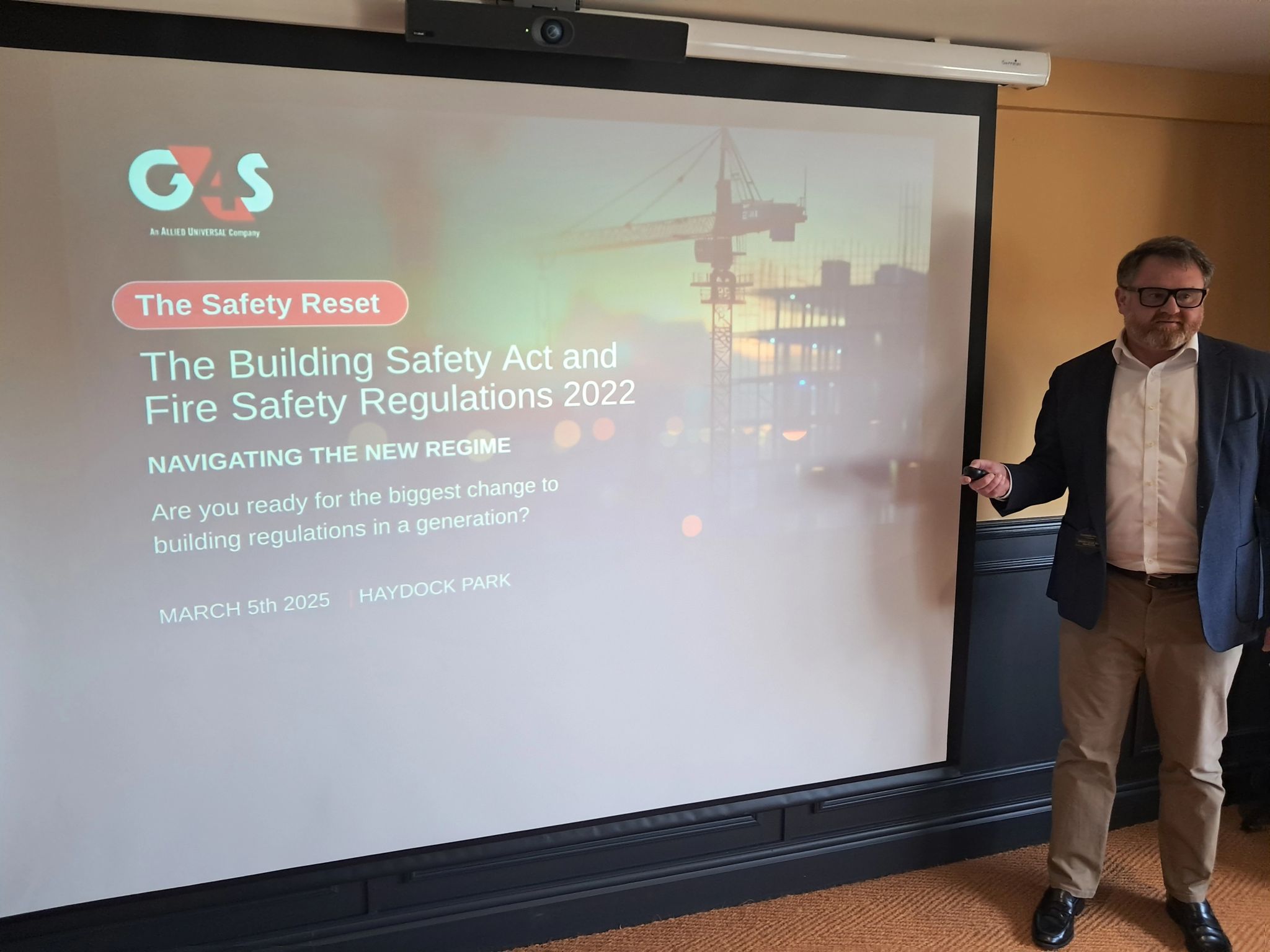
Responding to the Post-Grenfell Regulatory Landscape
Chris opened the session by reflecting on how major fire incidents have highlighted the limitations of traditional approaches to fire safety compliance. Investigations such as the Hackitt Review identified systemic weaknesses across design, installation, and verification processes, prompting significant regulatory reform.
The introduction of the Building Safety Act 2022 has placed a greater emphasis on competence across the supply chain and the creation of the “Golden Thread” of information, ensuring that accurate and accessible safety documentation is maintained throughout a building’s lifecycle.
For organisations involved in the design, installation, or commissioning of fire safety systems, this shift requires a more structured and transparent approach to compliance.
Understanding BS 7273-4 and System Interfaces
A key focus of the CPD session was BS 7273-4, the British Standard covering the actuation of release mechanisms for doors controlled by fire detection and alarm systems.
Chris explored how fire alarm systems often interface with other safety-critical building systems, including:
- Fire doors and door release mechanisms
- Electrically locked escape doors
- Powered sliding doors on escape routes
- Ancillary building systems connected to fire alarm signals
The standard establishes clear requirements for fail-safe operation and the selection of appropriate actuation categories, particularly Category A (Critical) for situations where safe egress depends on the correct operation of door release mechanisms.
Ensuring these interfaces operate reliably is essential, as failures in system integration can compromise life safety and evacuation strategies.
The Role of Documentation in the Golden Thread
A significant portion of the presentation focused on how compliance with BS 7273-4 contributes to the Golden Thread of information required under modern building safety frameworks.
Chris highlighted several key documentation practices that help demonstrate compliance, including:
- Request for Information (RFI) processes to formally record design requirements and system specifications
- System Overview documentation that clearly defines the selected actuation category and system operation
- Appropriate labelling and warnings for fire door release controls
- Commissioning certification confirming that release mechanisms have been correctly installed and tested
Together, these documents provide traceability and evidence that fire safety systems have been designed, implemented, and verified in accordance with relevant standards.
Addressing Competence and Industry Risk
The session also addressed the growing focus on competence across the fire safety sector. Chris discussed the concept of “unconscious incompetence”, where organisations may unknowingly operate outside the required standards due to gaps in knowledge or experience.
As regulators, fire authorities, and building owners increase their scrutiny of fire safety systems, failures in compliance can expose organisations to:
- System failures that compromise occupant safety
- Enforcement action and regulatory intervention
- Legal liability under the Building Safety Act
These risks reinforce the importance of robust design processes, independent verification, and professional competence throughout the project lifecycle.
Collaboration Across the Industry
The event featured contributions from several industry experts addressing different aspects of fire safety standards and system integration.
Chris was joined by:
- John Blundell (Honeywell), who presented on BS 8629 and Gent systems
- Patrick Jefferies Dip GAI (ABLOY UK), who discussed BS 7273-4 compliant locking systems
The sessions provided knowledge transfer for manufacturers, consultants, contractors, and building operators, reinforcing the need for collaboration across the industry to improve compliance and building safety outcomes.
Supporting Better Building Safety
At ROFC, our work focuses on design, verification, advisory, and training services for electrotechnical fire safety systems, helping organisations navigate complex standards and regulatory requirements.
Events such as The Safety Reset provide an important platform for sharing technical knowledge, strengthening industry competence, and supporting the sector’s transition to a more robust compliance framework.